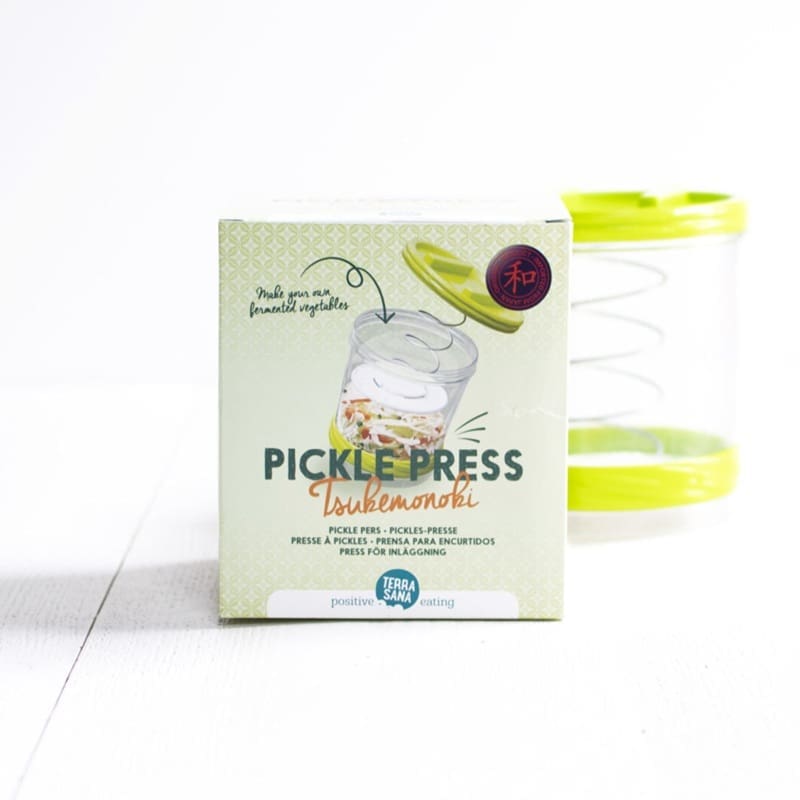
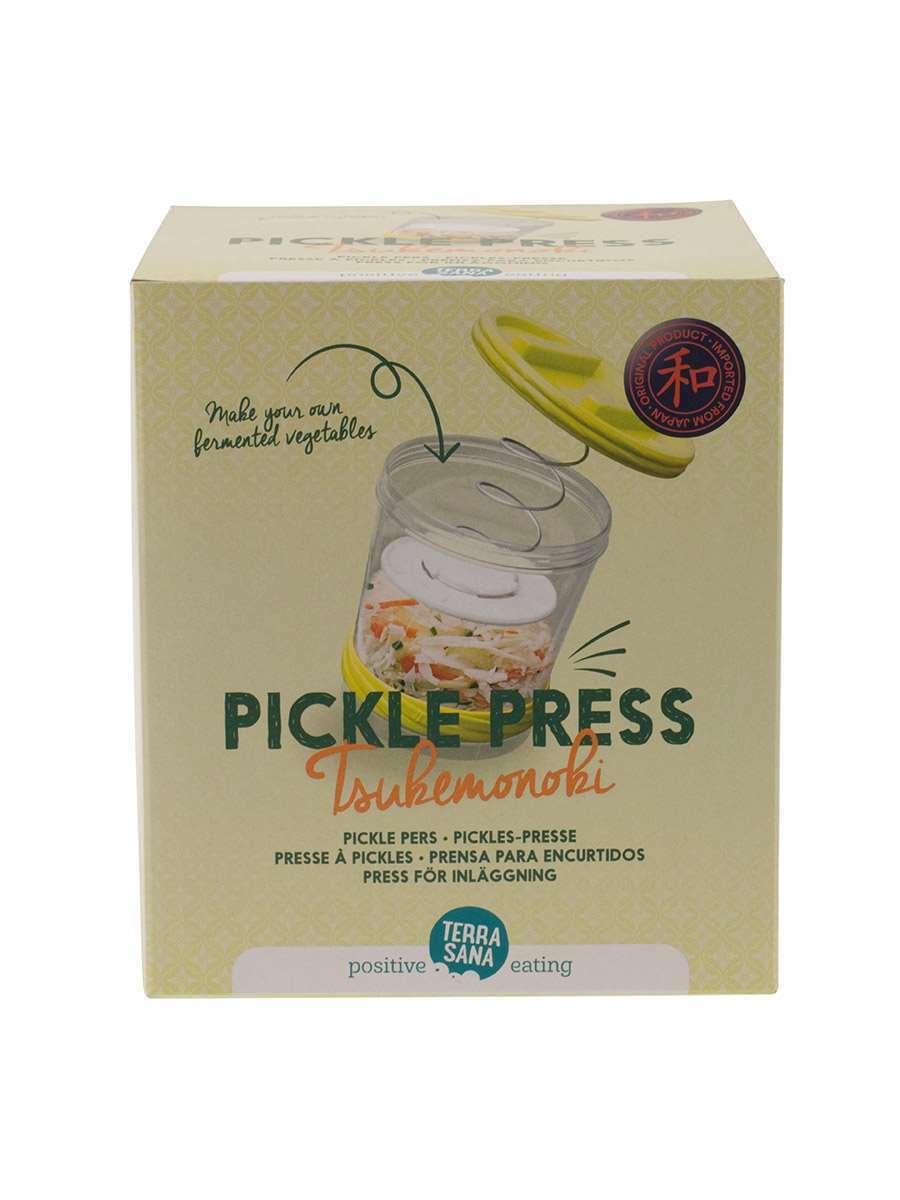
With TerraSana’s pickle press (Tsukemonoki) you can ferment fruits and vegetables at home very quickly and hygienically. By fermenting yourself, you can enrich a product and make it last longer. Fermentation not only gives your food a delicious taste, it is also much easier than you think! Think of vegetables especially hard vegetables like beet, cabbage, carrot, onion and pumpkin. Even after months of fermentation, these varieties are still delicious! Softer vegetables such as cucumber, tomato and spinach get mushy quickly, so ferment these briefly. Fruit also ferments well. Think especially of peaches, plums, apricots and exotic fruits like pineapple and mango.
Some rules you need to know about fermenting with the TerraSana Pickle Press are
- Typically, a longer fermentation time represents stronger flavors and more acidity.
- The fermentation process goes faster when the temperature is around room temperature and the humidity is high: so in summer the process goes faster!
- Ensure good hygiene of the pickle press and wash your hands thoroughly before, during and after the process.
- Using too little salt makes products less crispy and in some cases even unsafe due to improper bacterial growth.
How to use TerraSana’s Salad Pickle Press 1200ml
This is how you make your own pickle:
- Step 1: put 400 g of your favorite chopped vegetables (or fruits) in the pickle press.
- Step 2: Add 2 tbsp genmai su, ume su or mirin.
- Step 3: Add 1 tsp of spices (optional).
- Step 4: knead 6-8 g of salt through the vegetables (2% of the vegetable weight).
- Step 5: Be patient for a few hours. 1 hour for a slightly fermented taste, several days for a really fermented taste. With 4 hours, you’re always good. Taste until you like it!
- Step 6: Drain the pickle and season your pickle with umeboshi, furikake or tahini, for example.
- Step 7: Store your pickle in the refrigerator for 3 days.
Produced in
Japan
BPA Free. TerraSana’s Pickle Press container, pressure plate and lid consist of:
plastic (PS/acril nitrile and PP, PE). The spring is metal (stainless steel).
PS=polystyrene PP=polypropylene PE=polyethylene




Reviews
There are no reviews yet.